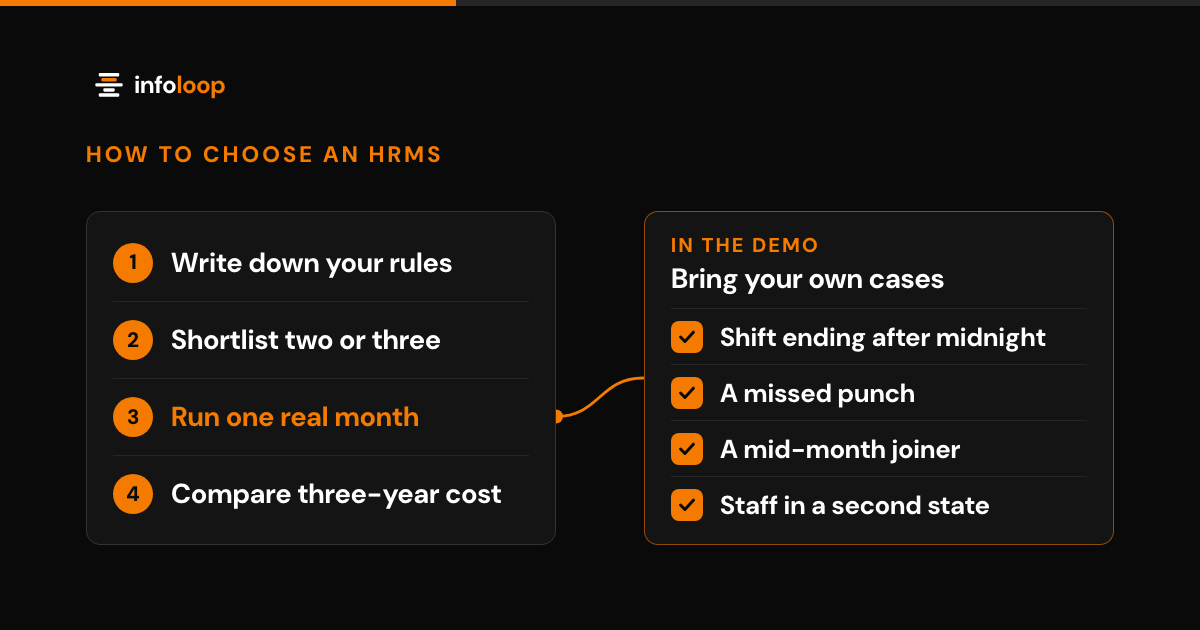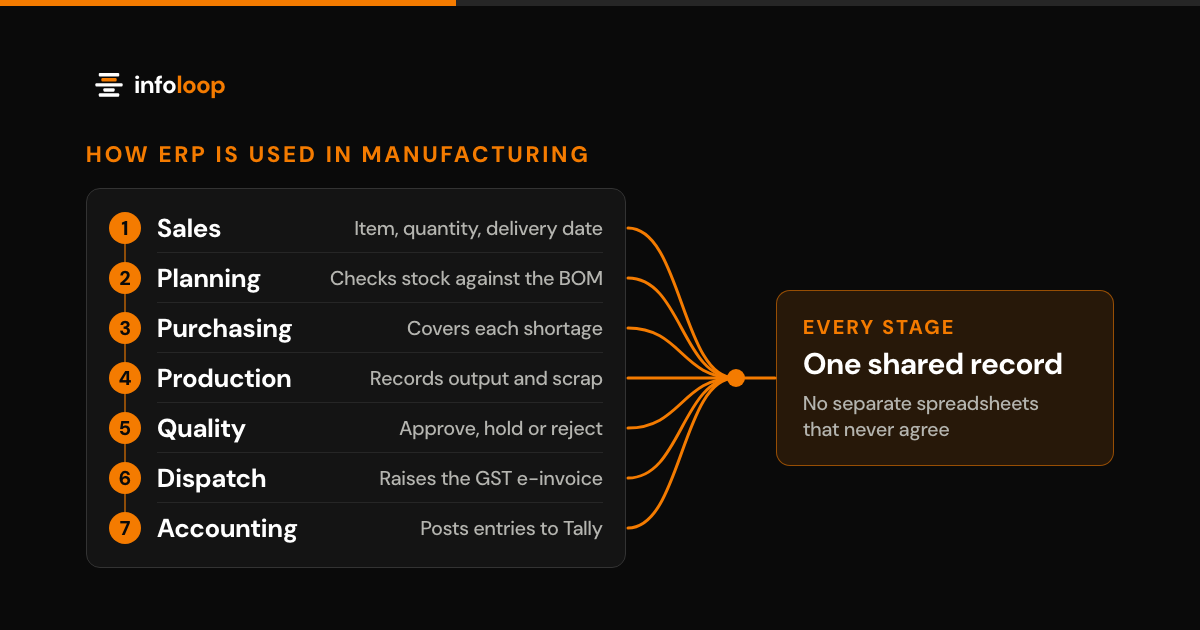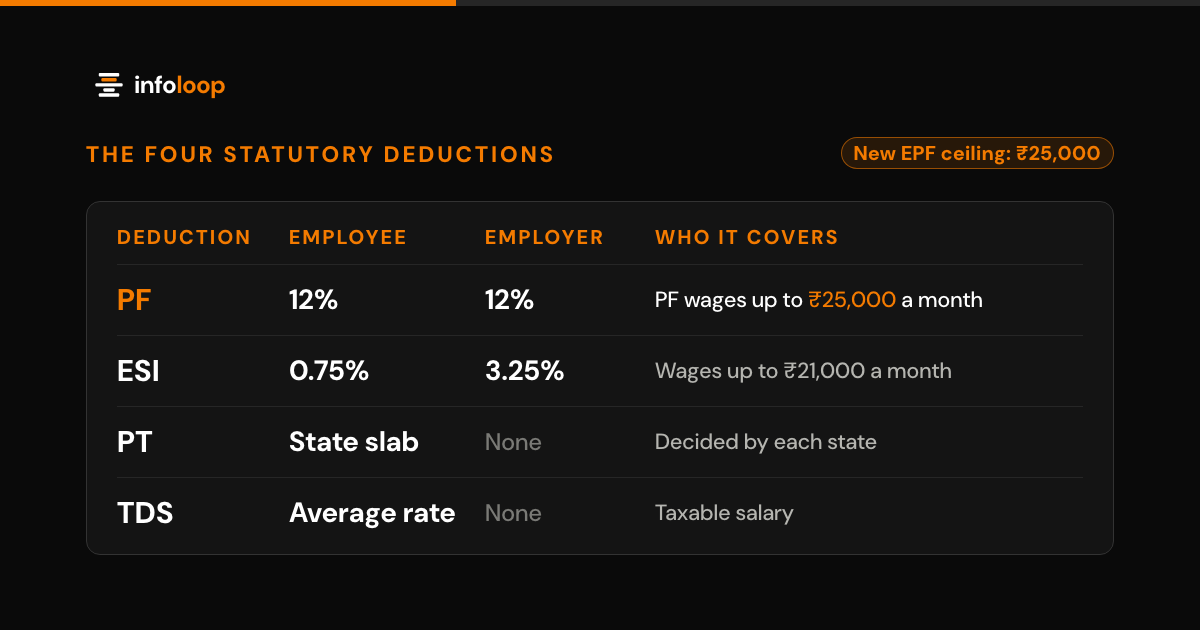
Nobody sets out to pay the wrong hours. It happens at the gate, on a night shift, or on a Monday when somebody's badge did not read. Here is where it starts and how to stop it before the payroll run.
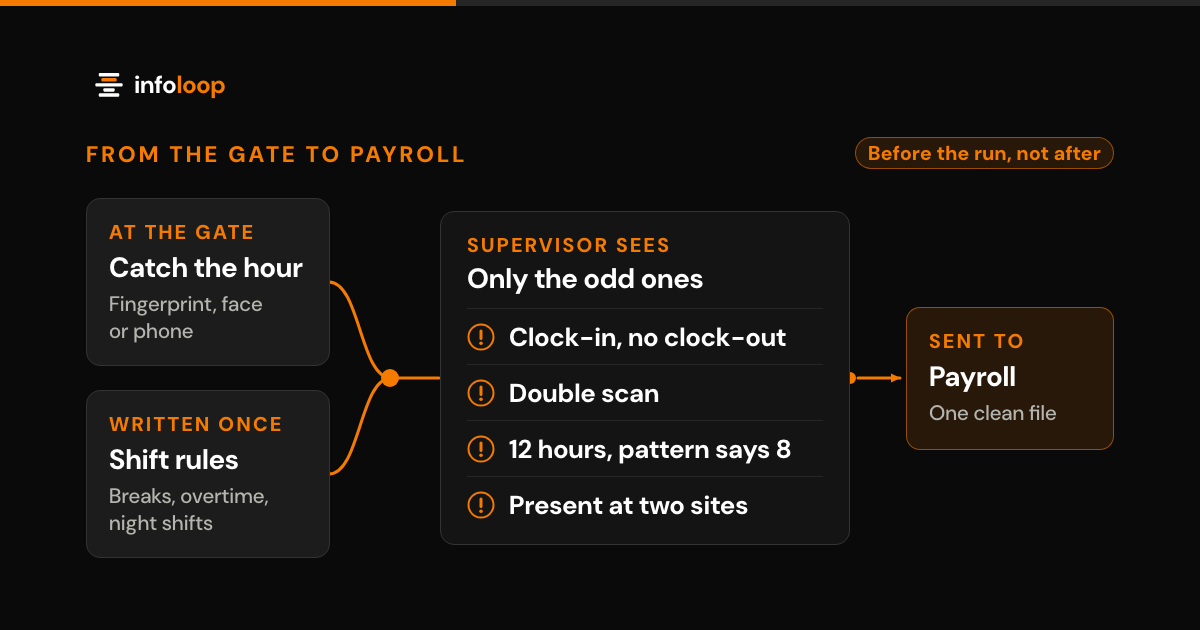
To reduce payroll errors in a factory, fix attendance before the payroll run. Capture each hour at the gate with a fingerprint, face or phone check-in, write your shift and overtime rules down once, and show supervisors only the entries that look wrong. Then send payroll one approved file instead of retyped timesheets.
Key takeaways
- Most payroll mistakes are made at the gate on Monday, not in the payroll office on Friday.
- Night shifts, agency labor, missed clock-ins and unwritten overtime rules are where the hours quietly go wrong.
- A wrong hour caught before the payroll run is one question to a supervisor. Caught after it, it is a correction, an adjustment and an argument.
- Show supervisors only the entries that look odd, rather than every line of a timesheet nobody will re-read.
- For one manufacturer, this went live at three plants in three weeks and cut timesheet admin by 90%.
The argument nobody wins
Every plant has the same Friday. Somebody comes to the office and says his hours are wrong. The supervisor is fairly sure he came in at six. The sheet says half past seven. The card reader has no record at all, because he was out at the gate for a delivery and came back in through the side door.
Nobody is lying. There is simply no record anybody trusts, so it gets settled by whoever remembers hardest, and then it gets settled all over again next month.
That is the real cost of loose attendance. Not the money on any one payslip, but the hours your supervisors and your office spend every single cycle arguing about numbers that should never have been in doubt.
Where the hours actually go wrong
It is nearly always the same handful of places.
The gate. Agency and contract staff sign in differently from your own people, often in a paper book, and their hours arrive last and get checked least.
Midnight. A shift starting at ten at night and ending at six in the morning belongs partly to one day and partly to the next. Split it the wrong way and somebody is short, or somebody is on overtime who should not be.
The missed punch. A reader that did not beep, a glove, a queue at shift change, someone who went straight to a breakdown. One missed punch becomes a whole shift typed in from memory three days later.
Overtime rules nobody has written down. After eight hours in the day, or after 48 in the week, or only when a supervisor approved it beforehand. Under the Labour Codes, overtime must pay at least double the normal wage rate, so every unapproved hour costs at least twice as much as a normal one. If three people in your business would answer that question three different ways, your payroll is already inconsistent.
The last-minute swap. Two workers swap a shift on Tuesday and tell each other. The sheet says nothing.
Why fixing it after the run costs so much more
Before the run, a wrong hour is one question to a supervisor, answered on the spot.
After the run it is a correction, a payslip somebody has to explain, and an adjustment carried into next month. Your accounts have already taken those figures, so they have to be put right as well, along with any PF and ESI figures built on them (our payroll software guide covers those checks). Worse, you now have a worker who no longer quite trusts the payslips and checks every one from here on. Then the story goes round the floor and three more people turn up at the office.
It is the same work either way. It is just enormously cheaper on the Wednesday than on the following Tuesday.
Get the hour right at the gate
The single biggest improvement is capturing the hour at the moment it happens, in a way nobody can fill in afterwards from memory. A fingerprint or face reader on the door, and a check-in on a phone for drivers and anyone working away, each one tied to the person and to the shift they are actually on that day.
Two things follow. Nobody clocks in on behalf of anybody else. And the hour on the record is the hour that happened, rather than the hour somebody reconstructed on the Thursday.
Write the shift rules down once
Your shift patterns, break deductions, overtime thresholds and the way a night shift is split across midnight all need writing down once and applying the same way every time. Not held in the head of the one person in the office who has been there fifteen years and is due to retire.
Most plants skip this part, and it is the part that quietly costs the most, because from the floor an inconsistency looks exactly like unfairness. When you compare software for this, our HRMS buyer’s checklist lists the shift and overtime questions to ask.
Show a supervisor only the odd ones
Nobody is going to re-read four hundred lines of timesheet, so do not ask them to. They get the ones that look wrong instead: a clock-in with no clock-out, a double scan a second apart, a twelve-hour shift where the pattern says eight, someone marked present at two sites on the same afternoon.
The supervisor looks at those, says what actually happened, and approves. The flags arrive daily, a short review once a week clears them, and everything else was already right. That is the whole change. You stop checking everything and start checking only what does not fit.
One clean file, not fourteen spreadsheets
Once hours are approved they should go to payroll in one go, with overtime already worked out, rather than being retyped by somebody at eight in the evening on the last day of the month.
Retyping is not simply slow. It is a second place for mistakes to get in, after you have gone to the trouble of closing the first one. We built exactly this for a manufacturer with three plants. OpsDeck went live at all three in three weeks, timesheet admin fell by 90%, and no missed punches reached payroll (read the case study).
“Our shifts are too complicated for that”
We hear this on nearly every call, usually from a plant running four patterns, a night shift, agency labor and a roster that changes over the summer. That is complicated. It is not unusual, and it is not a reason to stay on paper. It is the reason paper is failing.
One thing we would say plainly, though. Do not change how the plant runs to suit the software. Anything that fights the way a floor really works gets worked around within two weeks, the supervisor starts keeping a quiet spreadsheet again, and you are back where you started while still paying for it.
What doing nothing costs
Days of office time every cycle. Overtime paid that nobody actually approved. A supervisor spending Friday on payroll instead of on the line. And a slow loss of trust that turns up in ways nobody puts on a spreadsheet: people checking payslips, people reluctant to cover a shift, people who believe the numbers are decided rather than counted.
None of that ever appears as a line item, which is exactly why it survives for years.
In short
Catch the hour when it happens. Write the rules down once. Show a supervisor only what looks wrong, before the run rather than after it. Send payroll one clean file. OpsDeck, our HRMS, CRM and ERP software for manufacturers in India, includes attendance and payroll that work this way. We fit it to your shifts and your gate, and we support it after launch.
Want to see it on your own floor? Book an OpsDeck demo and bring one week of punches, including a night shift and a missed punch.
Frequently asked questions
What causes most payroll errors in a factory?
Most payroll errors in a factory start on the shop floor, not in the payroll office. Agency staff sign a paper book at the gate, and night shifts get split the wrong way across midnight. Missed punches get typed in from memory days later. Nobody has written the overtime rules down, and shift swaps never reach the sheet.
Why is it cheaper to fix a wrong hour before the payroll run?
Before the run, a wrong hour is one question to a supervisor, answered on the spot. After the run it becomes a correction, a payslip somebody has to explain and an adjustment carried into next month. Your accounts must put the figures right, and the worker now checks every payslip.
Do supervisors need to check every line of the timesheet?
No, they only need to see the entries that look wrong. Typical ones are a clock-in with no clock-out, a double scan a second apart and a twelve-hour shift where the pattern says eight. Another is somebody marked present at two sites on the same afternoon. A short review once a week is then enough.

Co-founder and CEO
Nimit leads Infoloop's custom software and AI work, for companies whose processes don't fit packaged software.