RAG and AI Knowledge Bases That Answer from Your Own Documents
The answers your team needs sit in manuals, policies and records few people can find. We connect OpenAI, Anthropic or Google Gemini models to those documents and your knowledge base. Staff and customers get answers with cited sources they can check. Access follows role-based permissions, and uncertain questions go to a person. Infoloop is an enterprise AI and RAG (retrieval-augmented generation) development company for answers from your own content.
- <2 minfirst response time with an AI support assistant, down from hours
- 72%fewer manual ticket hours within a quarter for a fintech scale-up
- 5 wksto put the AI support assistant live
Answers from your own documents, with sources
Sources citedHow answers are grounded
- Your documents
- Cited sources
- Role-based access
Uncertain questions go to a person.
Answers from your documents. Sources you can check.
Enterprise AI and RAG for your industry
Each industry keeps its knowledge in different documents and records. These are the knowledge bases we connect to AI most often in each sector.
Manufacturing
Answers from maintenance manuals, quality procedures and plant records, for operators and engineers on every shift
Automotive and garages
Service manuals, parts catalogs and job histories searchable by staff at every branch
AI startups
Retrieval with cited sources inside your product, evaluated on real questions before each release
SaaS and technology
Support answers grounded in your help center and release notes, with a source customers can check
Energy and utilities
Regulations, permits and site records searchable in one place, with answers that cite the document
Consumer platforms
Member questions answered from your policies, with uncertain cases passed to a person
eCommerce and D2C
Product, shipping and returns questions answered straight from your own catalog and store policies
Education and training
Course material and handbooks searchable by learners and staff, with answers tied to the source page
How we work
How we build enterprise AI and RAG
Four stages, from your sources to answers staff can check.
 01
Discovery and content review
We review the documents and records the assistant will use. We also look at who asks the questions and what a wrong answer costs. We flag gaps and outdated content before any development.
 02
Solution design and scope
You receive the design: the sources it reads, the permissions for each role and how answers cite sources. The cost and the billing model come with it.
 03
Build, integration and evaluation
We set up retrieval with vector search over your content and connect the model to your tools. Each version is evaluated against real questions with known answers, and your teams test it before launch.
 04
Launch and optimization
The assistant launches with permissions, logging and escalation to a person active from day one. Optional monthly support covers monitoring and fixes within an agreed service level.
Why teams choose us for enterprise AI and RAG
- 01Answers with cited sources staff can check
- 02Role-based permissions on every document
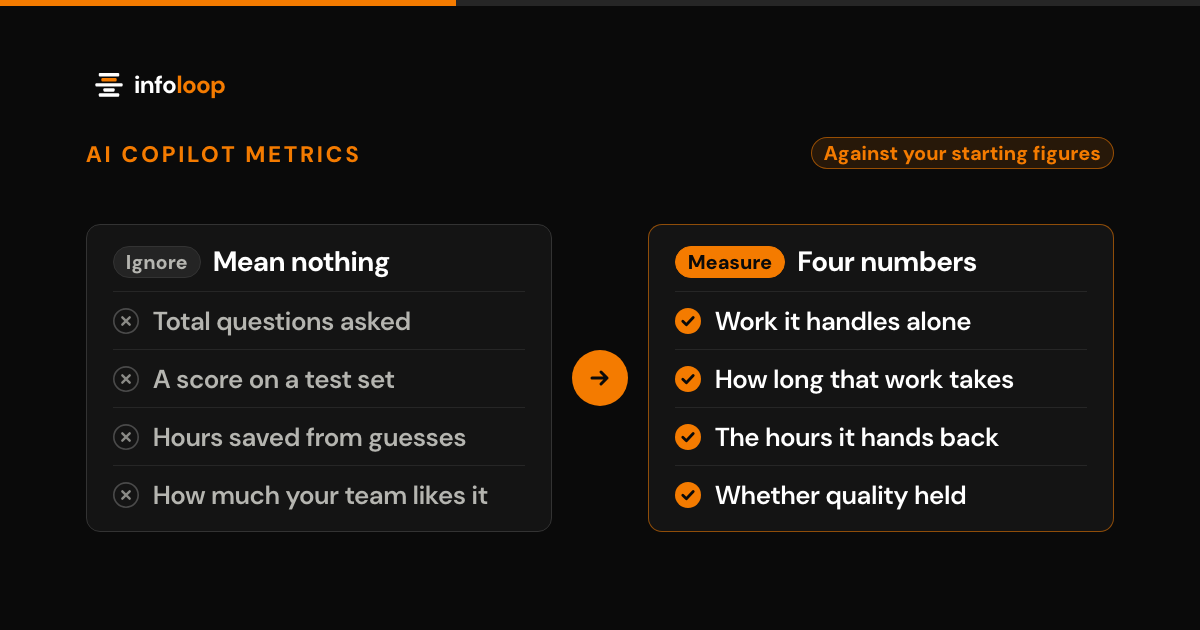
- 03Evaluation on real questions before launch
- 04OpenAI, Anthropic or Google Gemini, matched to the job
- 05Uncertain questions passed to a person
- 06Every answer logged with its sources
- 07You set what data leaves your business
Answers with cited sources staff can check
Why teams choose us for enterprise AI and RAG
Role-based permissions on every document
Evaluation on real questions before launch
OpenAI, Anthropic or Google Gemini, matched to the job
Technologies we use for enterprise AI and RAG
| AI models |
|
|---|---|
| Agent frameworks |
|
| Backend |
|
| Frontend |
|
| Mobile |
|
What our clients say
They shipped our support agent in five weeks and it has run ever since. Response time dropped from hours to two minutes.
FAQs
Questions about RAG and AI knowledge bases
Straight answers. If yours is not here, ask us on the call.
What is RAG, and why does it matter for enterprise AI?
RAG stands for retrieval augmented generation. Before the model answers, it retrieves the relevant passages from your own documents and answers from them, with the sources cited. That keeps answers tied to your content rather than the model's general training, and lets staff check each one.
Which documents and tools can a RAG assistant connect to?
Usually the places your knowledge already lives: shared drives, help centers, wikis, ERP and CRM records and in-house databases, through the APIs those products provide. We agree the list of sources with you. Where a source has no API, we explain the reliability cost of any workaround.
How do you keep confidential documents secure?
The assistant follows role-based permissions, so each person only gets answers from documents they are allowed to see. The agreement sets what data leaves your business, where it is processed and how long it is retained. Every question and answer is logged, and every project is covered by an NDA.
How do you stop the assistant from giving wrong answers?
It answers only from retrieved passages and cites them. When the sources do not cover a question or confidence is low, it says so and passes the question to a person. Before launch, each version is evaluated against real questions with known answers, and you see the results.
How long does an enterprise AI assistant take to build?
It depends on the number of sources and how clean the content is. As a reference, our fintech support assistant went live in five weeks, and within a quarter manual ticket hours fell by 72%.
Who owns the assistant, and what support is there after launch?
You own the code, the data and the accounts. At handover, your team receives the documentation and logins. Or choose optional monthly support with monitoring, fixes within an agreed service level and a monthly report on what the assistant answered and passed to a person.
Do we need to clean our data before building a RAG assistant?
Usually some preparation, not a full cleanup. The first step is data readiness: finding the documents the assistant may use, removing outdated versions, and setting who may see what. We review your content before quoting, and the assistant starts with the sources that are already reliable, then expands.
What does an enterprise RAG assistant cost?
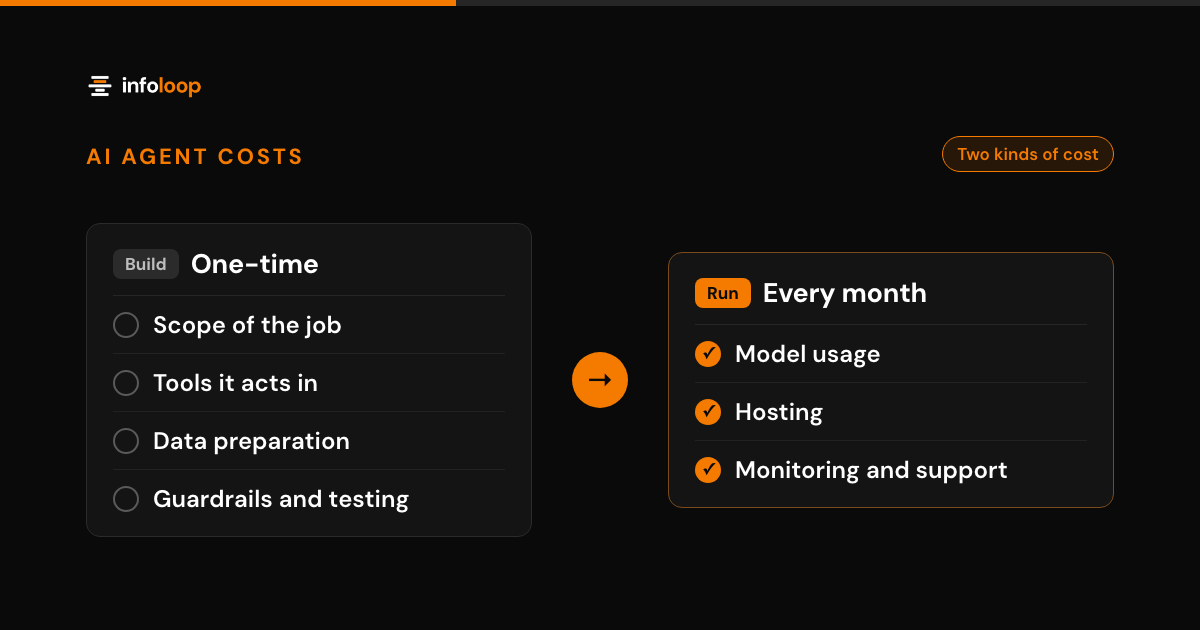
RAG work is scoped as custom software, which starts from $15k at Infoloop. The cost follows the sources: how many document stores it reads, how much content needs cleaning and how detailed the permissions are. After launch, you pay the model provider for usage and keep the index current as documents change.
RAG or fine-tuning: which do we need?
Most business assistants need RAG first. RAG looks up your current documents at answer time and cites them, so answers stay current and checkable. Fine-tuning changes how a model writes, not what it knows today. It helps with a fixed format or tone. Many teams never need it, and the rest add it once RAG works.
Bring us the questions your team answers every day
Bring the shared drive nobody can search, or the help center customers do not read. Or the policy questions that always reach the same three people. We will tell you whether a knowledge assistant fits and what it costs.