Hire AI Developers for Agents, RAG Assistants and AI Features
Dedicated AI developers and LLM engineers for agents, RAG and AI features
Your roadmap has an AI feature on it, and nobody on your team has shipped one. Infoloop places AI developers and LLM engineers who build agents, RAG assistants and AI features into your product. They build on OpenAI, Anthropic or Google Gemini models, with LangGraph or the OpenAI Agents SDK. A dedicated developer joins your team within 1 to 2 weeks and works in your repositories.
- AI agents that act in your tools, with approval on risky steps
- RAG assistants that answer from your documents, with cited sources
- AI features inside your product, within its existing permissions
- OpenAI, Anthropic or Google Gemini models, chosen per job
People you can also hire




AI that runs in production, not a demo. An AI developer in your team in 1 to 2 weeks.
Why product teams add an Infoloop AI developer
Typical AI work and how the developer fits your product team.
AI agents that act inside your tools
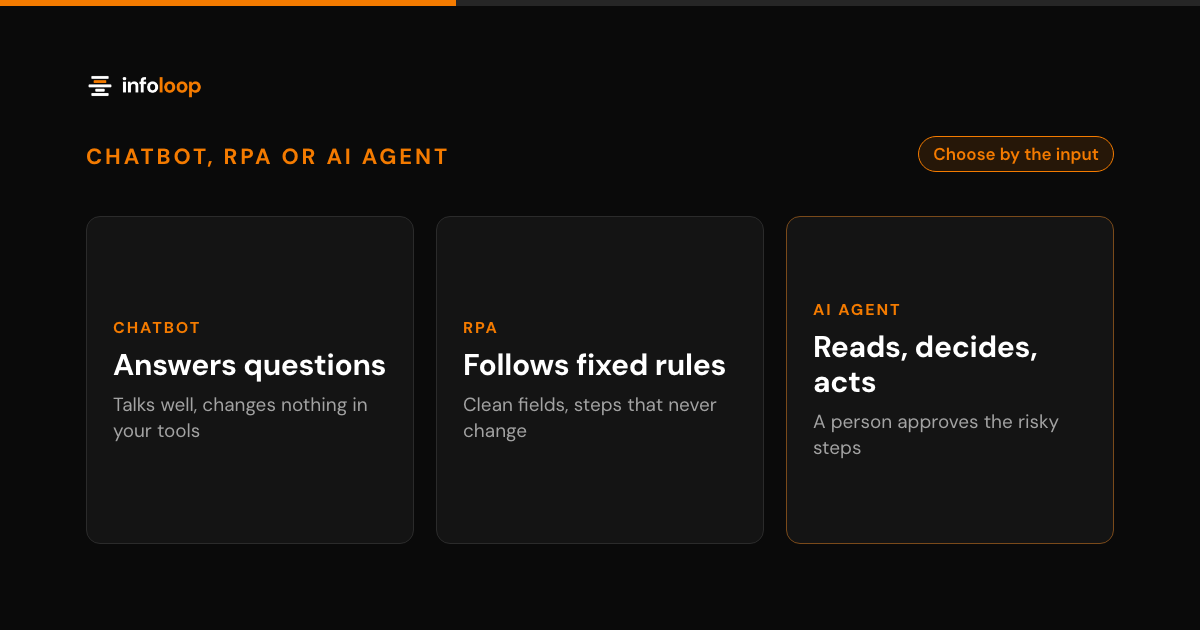
Agents look up records, draft replies and start the next step of a process. Each works within defined permissions, logs every step and asks a person before any high-risk action.
RAG assistants with sources you can check
Assistants answer from your manuals, policies and records, and cite the passages they used. Access follows role-based permissions, and uncertain questions go to a person.
AI features inside your product
Answers from your help center or a drafted report, built inside your current product and permissions. Each customer's data stays separate, and new features reach a few accounts first.
Tested on real cases before launch
Each version is evaluated against real examples with known answers. After launch, logs show what the AI handled, what it passed to a person and what it got wrong.
One AI engineer in your product team
The developer works with your back-end and front-end engineers in the stack you run, from Node.js and Laravel to React and Flutter. Our engineers work from Surat, India, and Infoloop Technologies Inc. is incorporated in the US.
Onboarding process
How an AI developer joins your product team
Four steps from an introductory call to AI running in your product.
 01
Scoping call
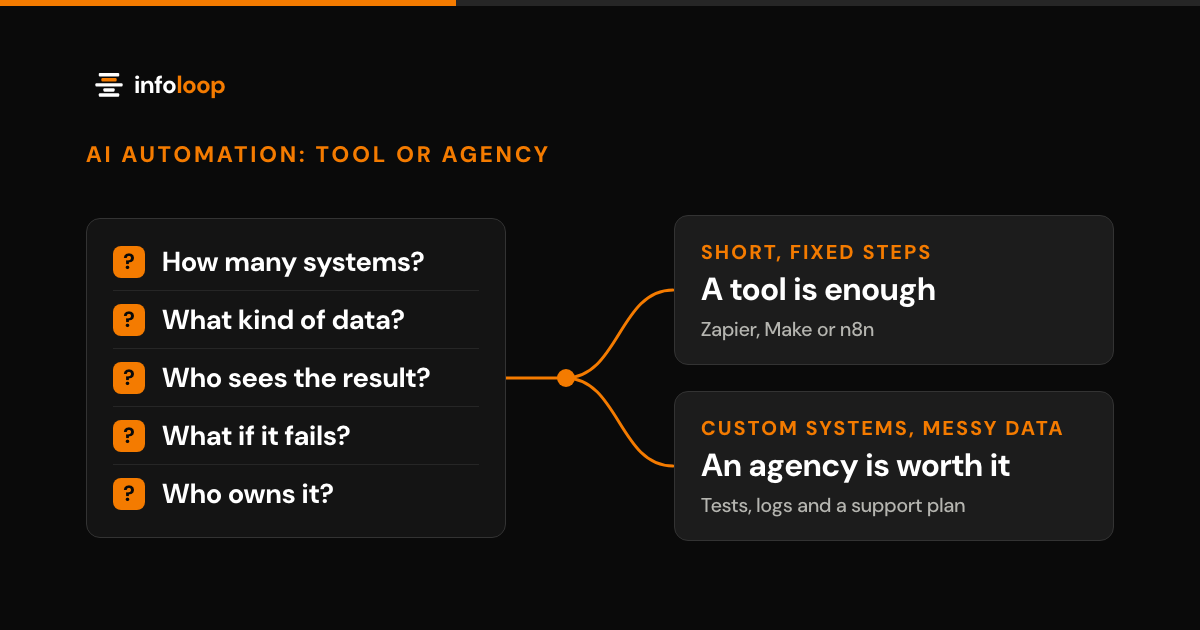
You describe the product, the AI feature and the data it needs. If a simple rule or form would do the job, we say so. The half-hour call is free.
 02
Interview and proposal
You interview the proposed engineer before anything is signed. The proposal lists the tools the AI may access, its guardrails, the scope and the billing model.
 03
Development on your real data
The engineer works in your repository, issue tracker and code review. Each version is tested on real cases, and your process owners review it before release.
 04
Launch, then handover or support
The feature launches with permissions, logging and human review in place. Your team then takes ownership, or the engineer continues on monthly support.
The AI stack our developers work in
| AI models |
|
|---|---|
| Agent frameworks |
|
| Backend and APIs |
|
| Web and mobile |
|
Engagement models for AI development
Three engagement models for AI work.
- Price a fixed project
Fixed-scope AI project
- Fixed price
- End date
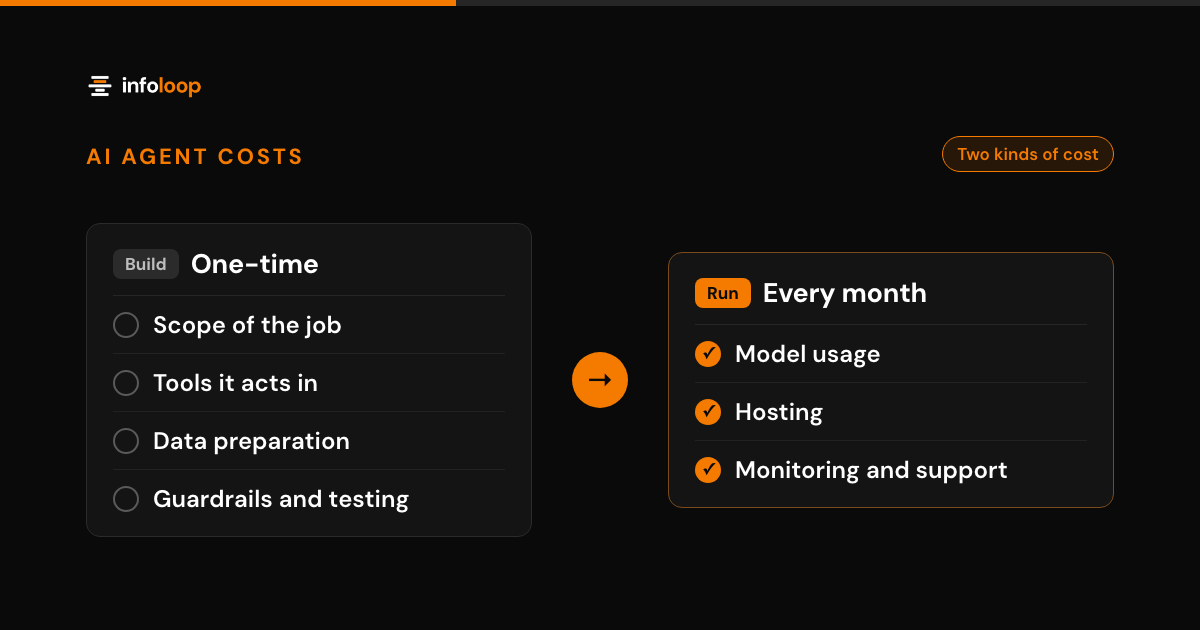
One defined deliverable: a support assistant, a RAG assistant over your documents or one AI feature in your product. It has a fixed price and an end date, and model usage is billed by the provider. Afterward, your team takes over or monthly support begins.
- Add an engineer
Dedicated AI developer
- Hourly or monthly
- You interview first
An AI developer joins your team for an agreed term, billed hourly or monthly. They work in your codebase and backlog. You interview them first, and the contract then continues month to month.
- Discuss hourly work
Hourly work for changing scope
- Time and materials
Hourly billing suits AI work whose scope will change, such as new data sources, prompt and model updates, and support. Support covers monitoring, fixes within an agreed response time and a monthly report.
What our clients say
They shipped our support agent in five weeks and it has run ever since. Response time dropped from hours to two minutes.
COO, fintech scale-up
Read the case studyRelated work
- Read the case study: AI support assistant for a fintech scale-up
Fintech
AI support assistant for a fintech scale-up
- Read the case study: Multi-plant ERP for a machinery manufacturer
Manufacturing
Multi-plant ERP for a machinery manufacturer
- Read the case study: Nine garage branches on one scheduling platform
Automotive
Nine garage branches on one scheduling platform
Request an AI scoping call
Describe the product and the AI feature you need. A named person replies within one business day.
FAQs
Answers for teams planning to hire AI developers
Direct answers on models, data safety, start dates and team fit. Raise anything else on the call.
What does an AI developer do?
An AI developer builds features that use large language models to answer, draft and act on your data. Typical work covers AI agents that act in your tools and RAG assistants that cite your documents. They also add AI features to your product, with permissions, logging and tests on real cases built in.
Which models and frameworks do your AI developers use?
OpenAI, Anthropic and Google Gemini models, with LangGraph or the OpenAI Agents SDK for multi-step agents. The developer picks a model per feature, not per company. The choice weighs accuracy on your real examples, running cost and where your data may be processed. We explain each choice in plain terms before building.
How fast can an AI developer start?
Usually within 1 to 2 weeks, and you interview the developer before they start. Day one needs access to your repository, the data the feature will use and your model provider account. A narrow first job can then go live in weeks. Our AI support assistant for a fintech scale-up went live in five weeks.
How do you keep our data safe?
Through clear limits, role-based permissions, human approval on risky actions and a log of every step. The agreement sets what the AI may read and change, and what data leaves your business. It also sets where that data is processed and how long it is kept. Every project is also covered by an NDA, as standard.
AI developer or data scientist: which do we need?
An AI developer builds on existing models, while a data scientist builds new models from your data. Most product teams need the AI developer first. Agents, RAG assistants and AI features run on OpenAI, Anthropic or Google Gemini models through their APIs. A data scientist suits forecasts or failure predictions drawn from your own history.
Can they join our existing team?
Yes, the AI developer works in your repository, issue tracker, sprints and code review. They build in the stack you already run, such as Node.js, NestJS, Laravel, React, Next.js or Flutter. Your own reviewers approve every change before it reaches production. The code, the prompts and the accounts stay in your name from day one.
Tell us which AI feature your product needs
Describe the product, the data and the work you want AI to take on. We confirm whether AI fits. If it does, you receive the scope, the guardrails and the billing model.